
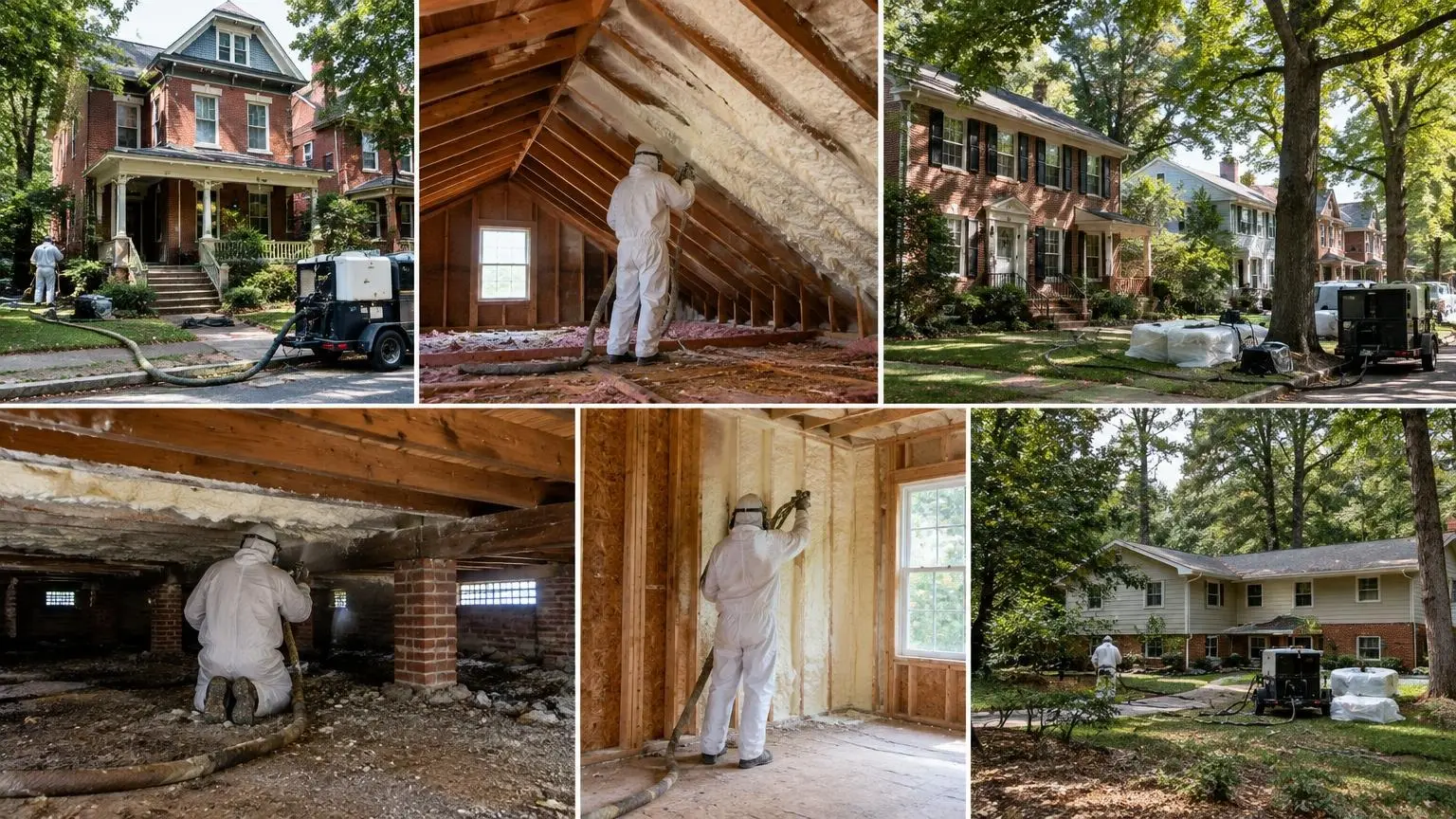
Vapor barriers, vents and foundation walls
Crawl Space Insulation & Encapsulation in Richmond, VA
Keep humid air and ground moisture out from under the house, then insulate the walls instead of fighting sagging batts.
- Free on-site estimates
- Written, itemized quote with R-values
- Air sealing before any insulation goes in
Fixing the Space Under the Floor
Crawl space insulation and encapsulation start with a moisture question, not an insulation one. A lot of Richmond-area homes sit on vented crawl spaces with a dirt floor and fiberglass batts stapled or wedged between the floor joists. In our humid summers, outdoor air coming through the vents carries a lot of moisture, and when it meets the cooler ground and framing underneath, that moisture has somewhere to settle. Batts soak it up, sag and fall, and the floor above gets cold in winter.
Signs the crawl space needs attention
- A musty smell in the house, especially in summer
- Insulation hanging down or lying on the ground
- Condensation on ducts or pipes under the house
- Dark staining or growth on the joists or subfloor
- Cold floors in winter, or cupping in wood flooring
- Standing water after heavy rain
What encapsulation means
Building Science Corporation's guidance is that crawl spaces should not be vented to the outside and should be treated like small basements. A sealed crawl space usually includes:
- a continuous ground cover of heavy polyethylene, overlapped and taped at the seams and run up the foundation walls
- foundation vents and other openings sealed
- insulation on the perimeter walls and rim joist instead of between the floor joists
- a way to control humidity, such as a dehumidifier or a small supply of conditioned air from the house
The parts work together. Sealing vents without a ground cover and humidity control can make a damp space worse.
Wall insulation versus floor insulation
Once the crawl space is sealed, the insulation belongs on the foundation walls, so the space stays close to the temperature of the house. Building Science Corporation lists 3 inches of closed-cell spray foam at about R-18 as one suitable option, and the 2021 Virginia code's table for Zone 4 lists R-10 continuous or R-13 for crawl space walls. Closed-cell foam is a good fit here because it tolerates moisture and seals the rim joist at the same time. Open-cell foam does not belong below grade.
Water comes first
If water is getting in, from gutters dumping at the foundation, grading that slopes toward the house, or a high water table, a vapor barrier will not solve it. We look at where water enters and tell you what should be fixed before encapsulation, and if drainage work is needed we say so plainly rather than covering the problem.
Partial options
Not every crawl space needs the full system. Replacing fallen batts, adding a proper ground cover and sealing the rim joist can make a big difference on a budget. The quote shows the full encapsulation and any smaller steps as separate lines, so you can choose.
What This Covers
Crawl space work is quoted in parts, so you can see what each step does.
Vapor barrier
Heavy polyethylene ground cover, taped at the seams and fastened up the foundation walls.
Vent and opening sealing
Foundation vents, access doors and penetrations closed and sealed.
Wall and rim joist insulation
Closed-cell spray foam or rigid foam on the perimeter walls and band joist.
Old batt removal
Sagging, wet or moldy batts pulled from between the floor joists and bagged out.
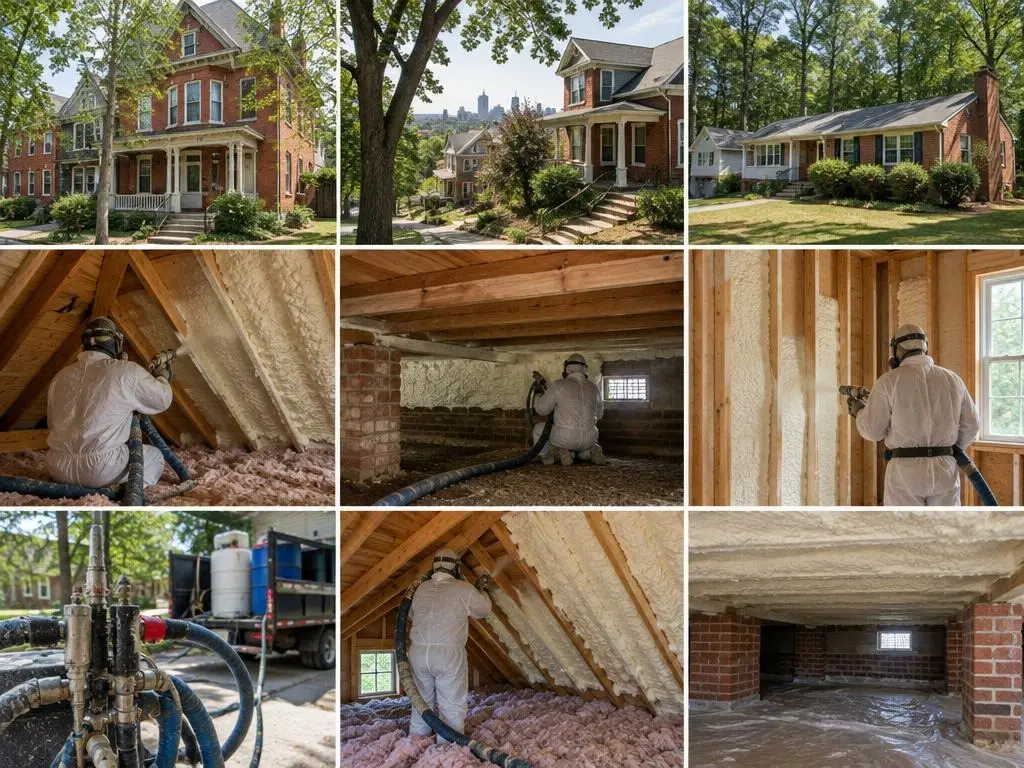
Typical Crawl Space Costs
| Item | Published range |
|---|---|
| Full encapsulation, average | $3,000 to $15,000 ($3 to $10 per sq ft) |
| Vapor barrier only, installed | $1,200 to $4,000 |
| Dehumidifier, installed | $1,000 to $3,000 |
| Sealing vents and holes | $150 to $450 |
| Closed-cell foam on walls | $2.00 to $5.00 per sq ft |
| Spray foam in a crawl space | $2,000 to $4,000 (HomeGuide); $1,000 to $5,900 (Fixr) |
National ranges from HomeGuide (2026) and Fixr (2025). Crawl space size, height, access and any water problems change the total. Your written estimate is the price.
How It Works
1. Crawl space inspection
We check moisture, water entry, insulation condition, framing and vents.
2. Quote by step
Removal, ground cover, vent sealing, wall insulation and humidity control are listed separately.
3. Clear and seal
Old batts and debris come out, the ground cover goes down and vents are closed.
4. Insulate the walls
Foam goes on the foundation walls and rim joist, then we review the space with you.
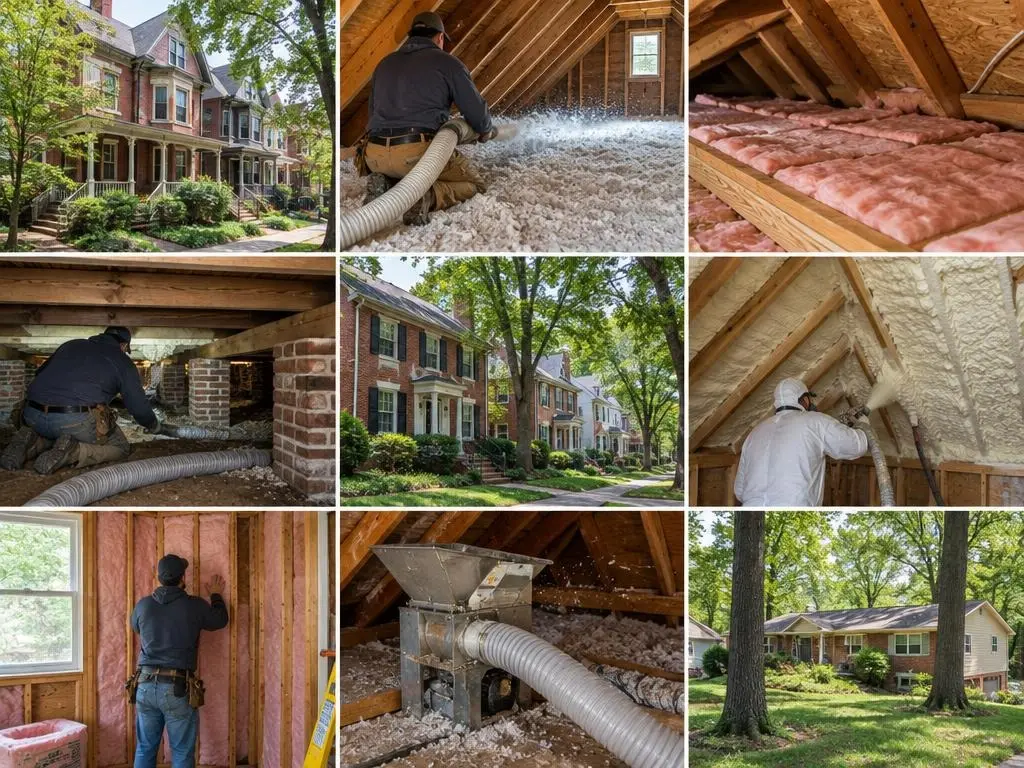
Crawl Space Insulation & Encapsulation Questions
Should a crawl space be vented or sealed in Virginia?
Building Science Corporation recommends against venting crawl spaces to the outside, because humid summer air brings moisture in. A sealed crawl space needs a ground cover, sealed vents, wall insulation and humidity control working together.
How much does crawl space encapsulation cost?
HomeGuide's 2026 guide lists $3,000 to $15,000 on average, or about $3 to $10 per square foot. A vapor barrier alone runs about $1,200 to $4,000. We quote each part separately after an inspection.
Do I need a dehumidifier after encapsulation?
A sealed crawl space needs some way to control humidity. That can be a dehumidifier or a small supply of conditioned air from the house, depending on the layout and HVAC system.
Why is the insulation falling down in my crawl space?
Batts between the floor joists absorb moisture from humid air, get heavy and pull away. Replacing them with the same thing often repeats the problem; sealing the space and insulating the walls avoids it.
Crawl Space Insulation & Encapsulation Service Areas
- Spray Foam Insulation in Richmond, VA
- Spray Foam Insulation in Henrico, VA
- Spray Foam Insulation in Short Pump, VA
- Spray Foam Insulation in Glen Allen, VA
- Spray Foam Insulation in Mechanicsville, VA
- Spray Foam Insulation in Chesterfield, VA
- Spray Foam Insulation in Midlothian, VA
- Spray Foam Insulation in Chester, VA
- Spray Foam Insulation in Bon Air, VA
- Spray Foam Insulation in Petersburg, VA
- Spray Foam Insulation in Colonial Heights, VA
- Spray Foam Insulation in Hopewell, VA
- Spray Foam Insulation in Ashland, VA
- Spray Foam Insulation in Highland Springs, VA
- Spray Foam Insulation in Sandston, VA
- Spray Foam Insulation in Tuckahoe, VA
- Spray Foam Insulation in Powhatan, VA
- Spray Foam Insulation in Goochland, VA
Get a Crawl Space Insulation & Encapsulation Estimate
Free on-site estimates for crawl space work.