
Loose-fill fiberglass and cellulose
Blown-In Insulation in Richmond, VA
The lowest cost per R-value for most attic floors, installed over sealed gaps and to a measured depth.
- Free on-site estimates
- Written, itemized quote with R-values
- Air sealing before any insulation goes in
Loose Fill, Done to the Right Depth
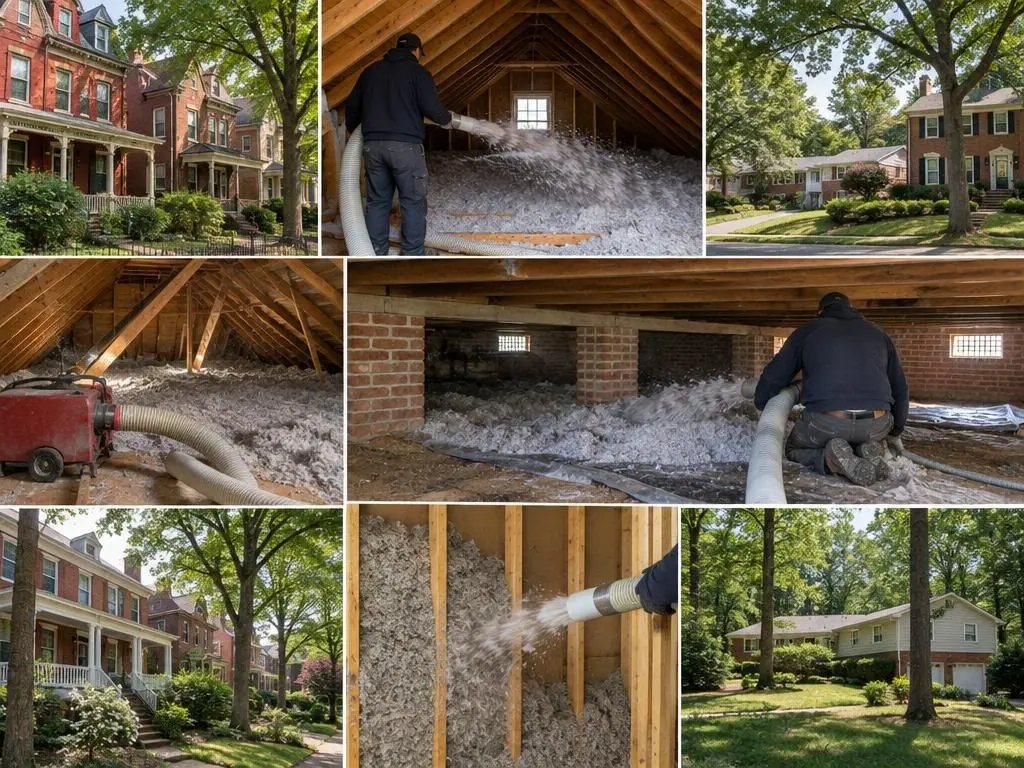
Blown-in insulation is loose fiberglass or cellulose fed through a hose by a machine. It covers joists, fills around wiring and blocking, and builds up to a uniform depth, which batts struggle to do in a cluttered attic. For a typical vented attic floor in Richmond, it is usually the least expensive way to reach the R-49 to R-60 range the Department of Energy recommends for this climate zone.
Fiberglass or cellulose
Both work, and the differences are practical:
- Fiberglass: about R-2.2 to R-2.9 per inch according to HomeGuide, so it takes more depth. It does not absorb much water and does not settle as much. It is light, which matters over older plaster ceilings.
- Cellulose: about R-3.1 to R-3.8 per inch. It is made largely from recycled paper treated with fire retardant, is denser and does a better job of slowing air movement through the insulation itself. It settles more over time, so it is installed a little deeper to allow for that.
We will recommend one for your attic and tell you why, but either is a sound choice when it is installed to the right depth.
Depth matters more than the label
The Department of Energy notes that loose-fill R-value does not rise in direct proportion to thickness, because the material compresses under its own weight. Each product has a coverage chart that lists the installed depth, settled depth and number of bags needed per square foot for each R-value. We work from that chart, count bags, and leave depth rulers in the attic so you can see the result.
Seal first, then blow
Blown-in insulation slows heat but lets air pass. In an attic floor full of open top plates, wire holes and light housings, warm humid summer air and conditioned house air keep moving through it. We seal those gaps before insulating, set baffles at the eaves to keep soffit vents open, and keep insulation away from flues and fixtures that need clearance.
In closed walls
Blown insulation also goes into existing walls through small holes, either from inside or from outside under the siding. That is covered on our wall insulation page, but the material is the same: dense-packed cellulose or fiberglass at a higher density than attic loose fill so it does not settle and leave a gap at the top.
When blown-in is not the answer
If the attic holds ducts or an air handler, a wet or contaminated layer of old insulation, or rooms with sloped ceilings, blown-in on the floor may not be the best fit. We will tell you when spray foam or removal should come first.
What This Covers
Blown-in work usually includes these steps.
Attic floor top-up
New loose fill added over existing insulation to the target R-value.
New attic install
A full depth of fiberglass or cellulose in an attic with little or none.
Baffles and dams
Eave baffles to keep soffit vents open and dams around the attic hatch.
Depth markers
Rulers stapled to framing so the installed depth can be checked.
Typical Blown-In Insulation Costs
| Item | Published range |
|---|---|
| Blown-in, installed | $1.00 to $2.80 per sq ft (HomeGuide); $1.65 to $3.80 (Fixr) |
| Attic floor | $900 to $3,600 (HomeGuide); $1,750 to $5,500 for about 1,500 sq ft (Fixr) |
| Fiberglass, installed | $1.00 to $2.80 (HomeGuide); $1.65 to $2.60 per sq ft (Fixr) |
| Cellulose, installed | $1.20 to $2.80 (HomeGuide); $1.75 to $3.80 per sq ft (Fixr) |
| Typical project | $800 to $3,000 (HomeGuide); $3,000 to $7,000 (Fixr) |
National ranges from HomeGuide (2025) and Fixr (2025); the two guides measure projects differently. Attic size, depth, existing insulation and air sealing change the total. Your written estimate is the price.
How It Works
1. Measure the attic
We check area, existing depth and material, and anything that needs fixing first.
2. Quote with bag count
The quote lists material, target R-value, installed depth and the number of bags from the coverage chart.
3. Seal and baffle
Gaps are sealed, baffles set at the eaves and clearances kept around flues.
4. Blow and mark
Insulation goes in evenly to depth, and rulers are left so you can see it.
Blown-In Insulation Questions
Is blown-in insulation worth it in Richmond?
For most vented attic floors, yes. It is usually the lowest cost way to reach the R-49 to R-60 range recommended for Climate Zone 4, especially combined with air sealing.
Does blown-in cellulose settle?
Yes, some. Manufacturers list both installed and settled depths on their coverage charts, and we install to the depth that gives the target R-value after settling.
Can blown-in insulation go over old insulation?
Usually, if the old layer is dry, clean and not vermiculite. If it is wet, moldy or contaminated, we recommend removing it first.
How long does blown-in insulation take?
Air sealing and blowing a typical attic is often a one-day job. Unlike spray foam, there is no re-entry wait, though the attic is dusty while we work.
Blown-In Insulation Service Areas
- Spray Foam Insulation in Richmond, VA
- Spray Foam Insulation in Henrico, VA
- Spray Foam Insulation in Short Pump, VA
- Spray Foam Insulation in Glen Allen, VA
- Spray Foam Insulation in Mechanicsville, VA
- Spray Foam Insulation in Chesterfield, VA
- Spray Foam Insulation in Midlothian, VA
- Spray Foam Insulation in Chester, VA
- Spray Foam Insulation in Bon Air, VA
- Spray Foam Insulation in Petersburg, VA
- Spray Foam Insulation in Colonial Heights, VA
- Spray Foam Insulation in Hopewell, VA
- Spray Foam Insulation in Ashland, VA
- Spray Foam Insulation in Highland Springs, VA
- Spray Foam Insulation in Sandston, VA
- Spray Foam Insulation in Tuckahoe, VA
- Spray Foam Insulation in Powhatan, VA
- Spray Foam Insulation in Goochland, VA
Get a Blown-In Insulation Estimate
Free on-site estimates for blown-in insulation.